Wonderful agents can now operate any legacy system
The systems AI couldn't reach are now reachable

The systems that run large enterprises are often also the ones hardest to connect to. They weren't built for APIs, and connecting them was its own project: getting an agent to work with a legacy system like Oracle, Epic, or a decades-old back-office platform typically meant months of API work, data mapping, and security reviews before any automation could begin. Parts of an enterprise could move quickly with agents, while the parts running on legacy systems were waiting on integrations.
Wonderful agents can now reach those systems too.
Agents that work your systems the way your team does
Wonderful agents can now operate software the same way your team does. They log into legacy systems, navigate to the right screen, fill in fields, switch between tabs, submit forms, and move through multi-step workflows from start to finish.
They run inside a managed virtual machine (VM) with secure credentials (the same setup you’d give a new hire) and a controlled session. Every action the agent takes is observable and auditable, and unlike scripted automation, Wonderful agents read the screen, understand what they're looking at, and decide what to do next. If a human can work in the system, the agent can too.
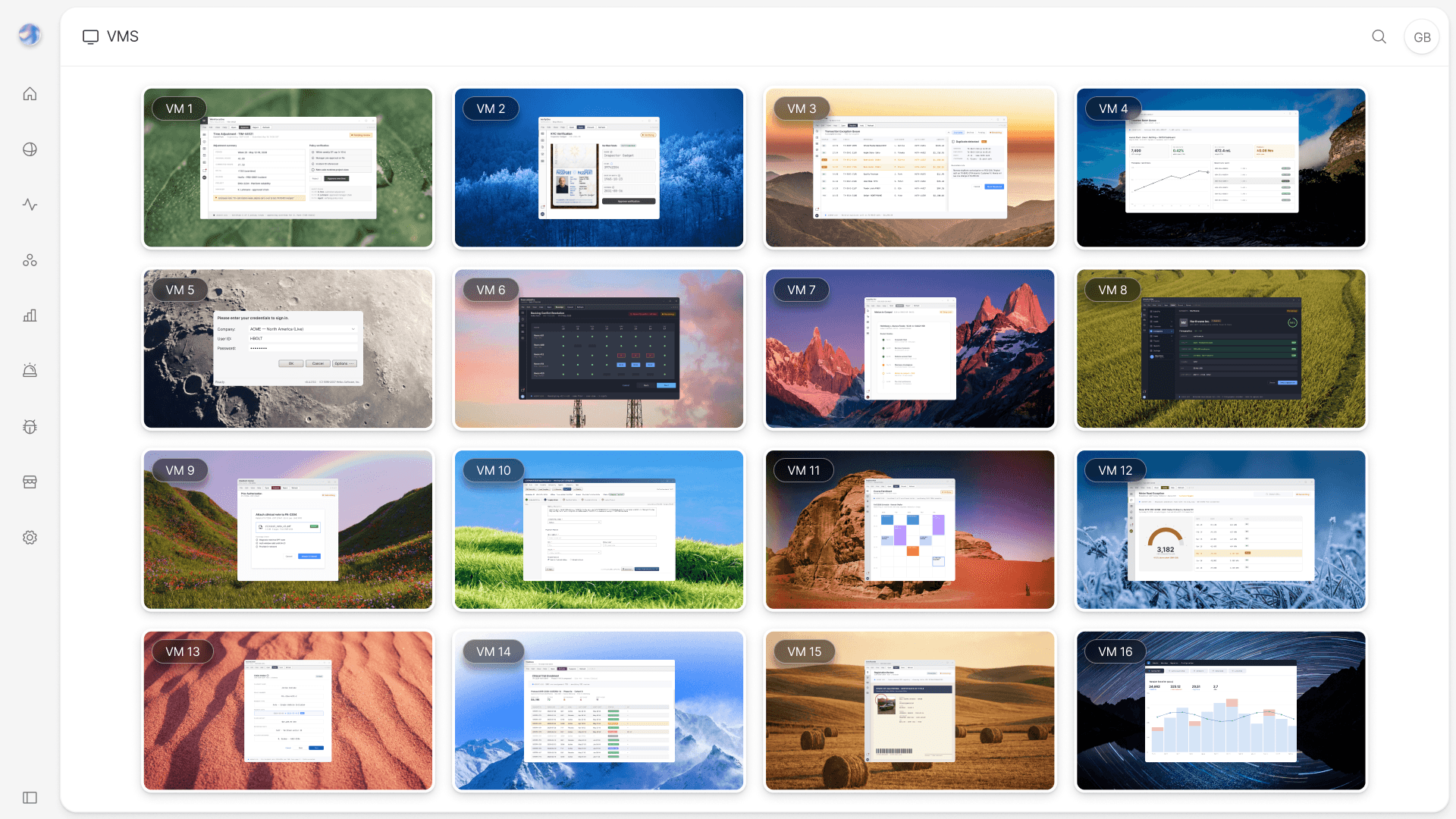
When agents are running at scale, you can see every session from one view: which are active, which have paused for human review, and which agents need attention. You can step in, review what’s needed, and keep it moving at any time.
What that looks like in practice
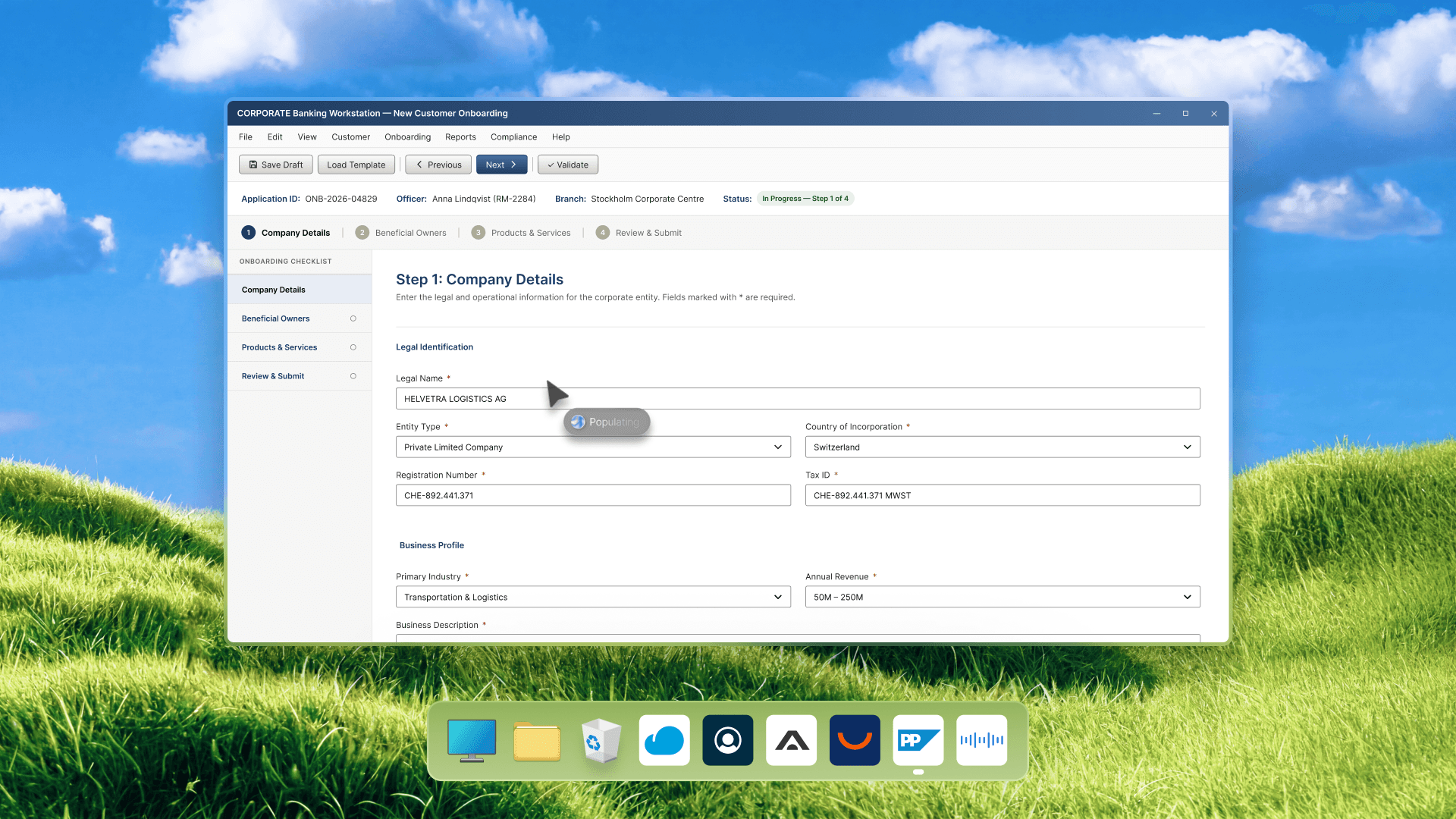
A claims agent can pull a policy from Epic, update the CRM, and log the outcome in a back-office system, end to end, without anyone building connectors between them first.
An agent handling loan applications can work through a decades-old underwriting platform: entering data, running the required checks, and handing off to a human for the final approval step. When the approval comes in, it picks up where it left off.
An agent processing customer records can log into SAP, navigate to the right module, extract what it needs, and carry that through to the next system in the workflow, all within the controls the team set.
The agent handles the full sequence, pauses where human review is required, and resumes when the work is cleared to continue.
The AI roadmap is no longer waiting on the IT roadmap
Legacy systems are now reachable without waiting on multi-quarter integration projects. Wonderful agents can reach any system your team uses, without integration work upfront. And as more of the enterprise stack becomes accessible to agents, the scope of what agents can own keeps growing.